
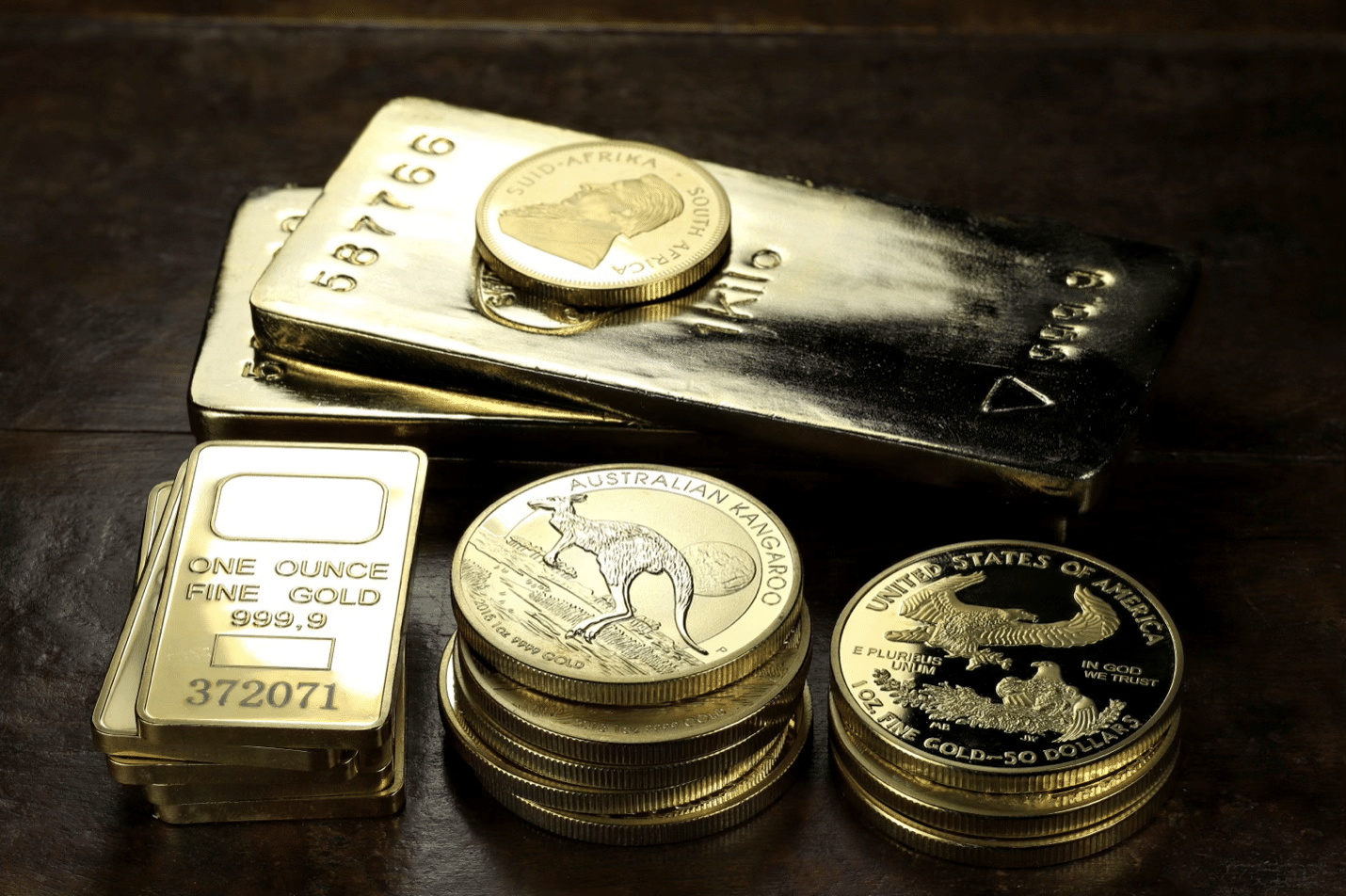
When Americans finally decide to buy real metal, they almost always reach for the most obvious choice first: U.S. Mint Eagles.
That’s not an accident.
Whether it’s gold or silver, stress in the system or a surge in awareness nearly always pushes demand into the flagship bullion coins of each country. For U.S. investors, that means Gold American Eagles and Silver American Eagles.
So how do those coins stack up against bars? And which is better for investors?
At Cole Metals Group, we believe coins—especially U.S. Eagles—are usually the better investment than bars, even though bars are a little cheaper on the way in. Let’s walk through why.
1. What Coins and Bars Have in Common
First, the basics:
- Both coins and bars can give you exposure to physical gold or silver.
- Both are available in a range of weights.
- Both can be held privately and outside the banking system.
So the question isn’t, “Are gold bars bad?” The question is, “Which format gives you the best combination of liquidity, trust, and potential upside when things get interesting?”
That’s where coins—especially American Eagles—start to pull away.
2. Government Guarantee vs. Private-Sector Bars
American Eagle coins (gold and silver):
- Are produced by the United States Mint under federal law.
- Have their weight, content, and purity guaranteed by the U.S. government.
- Are recognized and trusted worldwide.
- Are IRA-eligible when handled correctly.
The only thing not guaranteed is the future dollar price of gold or silver.
Compare that to private-sector bars:
- Produced by refiners and mints around the world.
- Many are good and reputable—but the level of trust in the marketplace is not uniform.
- Authentication risk can be higher, especially on resale or with larger bars.
In other words, investors instinctively understand that:
A one-ounce Gold Eagle is immediately trusted. A random private mint bar has to “prove itself.”
That trust premium matters—especially when you go to sell.
3. What Happens When Demand Surges? (Hint: Eagles Get Interesting)
One of the most important differences between coins and bars only shows up when things get stressful.
When there’s a surge in demand—because of:
- Financial stress
- Inflation headlines
- Banking scares
- Geopolitical events
…U.S. investors typically stampede into American Eagles first.
Why?
- They know them.
- They trust them.
- Every serious dealer in the country buys and sells them all day.
We’ve seen this movie before:
- During the 2008–2010 financial crisis, demand for Silver Eagles was so strong that the U.S. Mint had to suspend proofs, ration supply, and divert all planchets to bullion.
- During COVID, premiums on Silver Eagles blew out to around $15 over spot, and Gold Eagles saw premiums of $200+ per ounce in some cases.
Crucially:
I’ve never seen that kind of premium spike in generic bars.
Bars tend to trade close to spot even in high demand environments. Eagles, on the other hand, can develop a secondary premium over and above the metal price when the public is scrambling for the most recognized product.
That means if you already own Eagles going into a panic, you’re not only riding the move in gold/silver itself—you’re often capturing an extra return from spiking premiums.
Bars just don’t do that.
4. Small Denominations: Where Coins Really Shine
The higher gold goes, the more real this becomes.
At $4,200 per ounce, a single 1 oz gold coin is no longer the “modest” purchase it was when gold was $280/oz in 2000. As prices rise:
- Investors look for smaller, more divisible units.
- They want to be able to sell a portion, not the whole position, when they need liquidity.
- They also want something that feels affordable on a per-piece basis.
This is where fractional Gold Eagles (½ oz, ¼ oz, 1/10 oz) are incredibly useful.
But here’s the twist:
- The U.S. Mint does not make nearly as many fractionals as 1 oz coins.
- In a demand surge, those smaller sizes can be oversubscribed quickly.
- That makes them even more prone to premium spikes than the standard 1 oz.
So you have a situation where:
- Gold is rising
- People can’t easily swallow four- or five-thousand dollars per piece
- They flock to ½, ¼, and 1/10 oz Eagles
- Supply is thin
- Premiums jump
Again, bars—especially larger bars—do not see this kind of behavior. A 10 oz or kilo bar may be slightly cheaper per ounce up front, but it doesn’t get that scarcity-driven pop in a rush.
5. “But Bars Are Cheaper” — Are You Really Saving?
It’s true: bars are usually cheaper to buy on a per-ounce basis.
Why?
- They’re private-sector products with lower branding and marketing costs.
- They often come from high-volume refiners with very efficient production.
- They don’t carry the “flagship coin” premium that Eagles do.
But here’s the catch:
- Bars typically liquidate at or even below spot, depending on what you own and who’s buying.
- Coins—especially U.S. Eagles—almost always liquidate at a premium over spot, precisely because of their brand recognition and government guarantee.
So if you:
- Save, say, $40 per ounce on the way in with a bar, but
- Give up $60–$150+ per ounce in potential premium when you sell…
…have you really saved anything?
From our standpoint, the small “discount” on bars often turns out to be false economy. You save a little up front and potentially give up far more on the back end.
6. Silver: The Same Logic, Just Lower Price Points
Everything we’ve said about gold coins vs bars applies almost identically to silver:
- Silver Eagles are the U.S. flagship silver coin.
- They carry a U.S. government guarantee for weight and purity.
- They are among the most widely recognized silver coins on the planet.
- During periods of stress, premiums on Silver Eagles have exploded, while generic silver bars and rounds stayed relatively close to spot.
Yes, you can buy silver bars or generic rounds cheaper. Yes, you’ll pay less premium going in.
But if history is any guide, when the next wave of silver demand hits, Eagles will be the product investors chase first—and that’s where we’ve seen the most dramatic premium behavior.
7. When Does Investing in Gold Bars Make Sense?
We’re not against bars. They can make sense in certain situations:
- Very large allocations where the priority is pure ounces in bulk.
- Institutional or ultra-high-net-worth buyers building deep storage positions.
- Certain IRA strategies where the investor is less concerned with retail premium dynamics.
Even then, we usually prefer recognized, LBMA-standard bars from top-tier refiners—never obscure brands.
But for the typical individual investor looking for:
- Liquidity
- Recognition
- Flexibility in position size
- And the potential for premium upside during stress
…we believe government-minted coins are the better choice.
Summary
- Eagles are guaranteed for weight, content, and purity by the U.S. government.
- They are the first place U.S. investors go when they get serious about gold or silver.
- In times of stress, premiums on Eagles can spike dramatically—bars rarely do.
- Fractional coins offer affordability and divisibility, and can become scarce fast.
- Bars may be slightly cheaper to buy but often pay you less when you sell.
From the perspective of real-world behavior, liquidity, and total return, we believe gold and silver coins—particularly American Eagles—are usually a better investment than generic bars.
The marginal savings on bars simply don’t justify what you give up in trust, flexibility, and potential upside.